Hello everyone!
This is Ito.
I did all kinds of things last year, so I’m writing up a wrap-up as a save point 💾
Moved to Tagawa City
Some of you might already know, but I moved to a place called Iikane Palette. It’s in Tagawa City, about an hour and a half’s drive south into the mountains from Hakata. At a share house in a converted old school building that I’d been relying on for a while, I suddenly thought “hm, I kind of want to live here a bit longer — I can do remote work anyway” and just went ahead and moved.
I’d originally been torn about living in Hakata instead, for reasons like it being easier to secure alone time and having good access to Tokyo, but I managed to snag a private room at the share house, and just as I was deciding, a guy who happened to be moving out generously said “you don’t need a car, so I’ll just give you mine” — so I went “oh! I’ll take it!” and jumped right in and moved (which has been a huge help getting to volunteer work and bouldering in Hakata).
Why I moved
The main reason for moving after 4 years in Tokyo was that the mental cost of living in Tokyo had gotten too high. The financial side — not being able to afford rent or a car — turned out to be a big factor too once I’d actually moved, but the mental cost is the biggest one. Tokyo just has too many people. Commuting to Otemachi past drunk people, exhausted businessmen, and people dressed up in money, and having my company community become the main thing my life revolved around — both put a huge strain on me. The first time I lived a month at Iikane Palette, having people from completely different backgrounds chat with me after work made me feel like a weight had lifted off my shoulders and an excessive tension had melted away. Getting to spend such rich time with interesting people, and having fewer people around so I got to know more faces — in the countryside — made me really happy.
Before I moved, the culture festival held at Iikane Palette, which lots of people attended, left a strong impression on me and pushed me toward moving. Events were set up across the school’s various classrooms, and it was the kind of space where you’d stumble into some fun program without even realizing it. I happened to wander into a room where a live show was happening, and it was more amazing than I’d imagined — it moved me to think that letting someone stumble into a wonderful space like that could become nourishment for the rest of their life.
One more thing: disaster risk. With Tokyo’s high population density, its total reliance on transport for daily necessities, and its land and transit infrastructure being vulnerable to disaster, I found it scary to imagine being hit by a disaster there.
Also, one of the great things about Fukuoka is that access to the airports in Hakata and Kitakyushu is really good, which is great for me since I sometimes commute in to Tokyo. The food is great too, and there are a lot of people who look out for you — that’s another draw.
What’s actually been good about moving
Thanks to spending a lot of time talking with the people at the share house, and experiencing the kind of “empty space” that comes from the countryside having fewer people, jobs, and transit infrastructure, I’ve had more time to get my own thoughts in order. I’ve thought a lot about how much it actually costs me to live, and what I’d need to feel rich, happy, and fulfilled.
I realized that talking with all kinds of people from the local community, outside my company — adults and kids alike — connects hugely to my own sense of fulfillment. Thanks to that, the directionless loneliness I felt back in Tokyo has healed.
The feeling I had while living in Tokyo — that “no matter how hard I keep pushing forward like this, there’s no happiness for me down this road” — turned out to be right. Tokyo is a city that conjures images of financial success and growth, and I couldn’t help but feel an atmosphere there of winning happiness purely through individual responsibility. Talking with people who’ve experienced Tokyo and are now thriving in Tagawa, I hear that Tokyo’s flow of money and talent does have its own appeal, and I do actually get work from Tokyo myself, so there’s no question it’s a great place — but maybe it’s simply that I wanted to live somewhere with a sense of security, and wanted to help cultivate a place like that, and our directions just didn’t match.
Also, I’d been experiencing a bit of depression from work not going the way I wanted, but for now those symptoms have disappeared and my life has become more stable. You can never let your guard down with depression, but for now, things are getting better.
After moving
After moving, I settled in smoothly and got to really enjoy Kyushu, centered around Tagawa. By the way, my room is one-quarter of a former classroom, split into four. I go in and out through the sliding door that leads to the classroom’s balcony.
At first, I went hiking in the Kuju mountain range with share house members, went to hear rakugo in Kumamoto City, and visited the hot springs in Hita — since Kyushu lets you hop over to other prefectures just like Kansai does, I really enjoyed that. When I first arrived it was summer, so festivals were happening everywhere and I went to check them out.
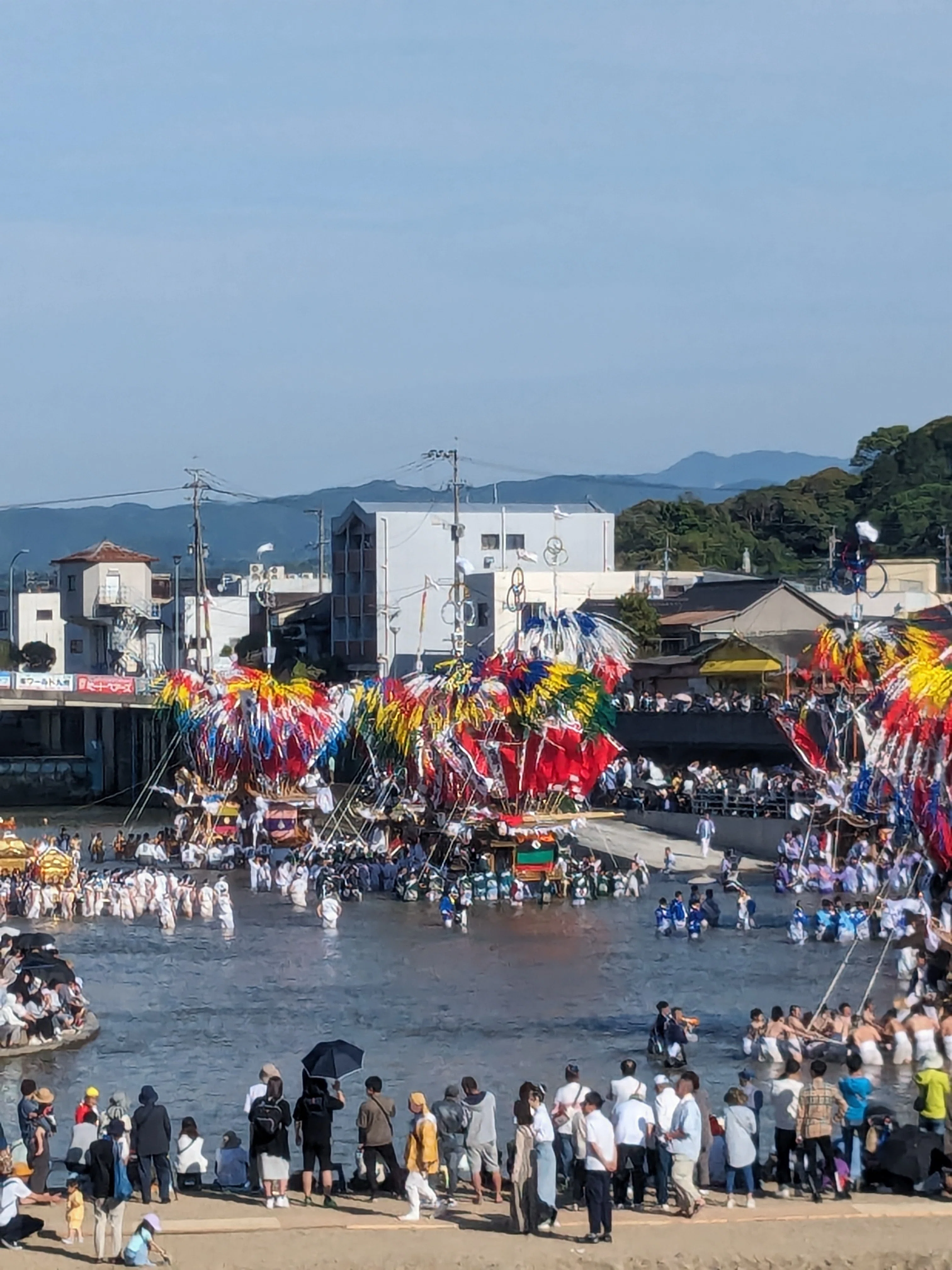
I entered an adventure race.
I also went to see fireflies, and went camping and river-playing.
For some reason, my family showed up billing it as a “family trip,” coming all the way from Osaka via Hakata to Tagawa. What a wild family. I introduced them to the representative, Aoyagi-san, and they left a huge pile of souvenirs for the share house members. Much appreciated.
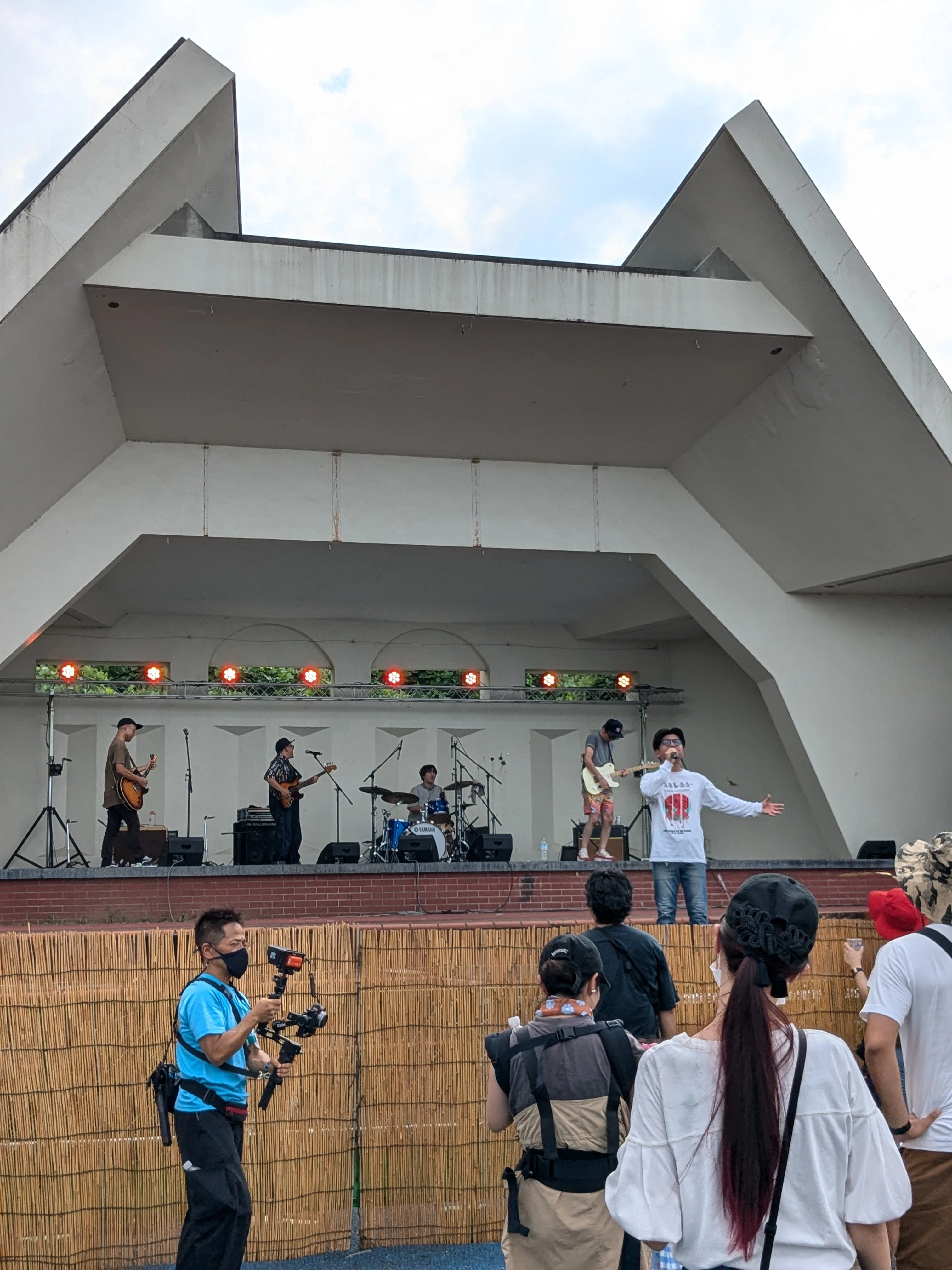
I also went to see a live show by “Diamonds,” led by Iikane Palette’s president, and a live show at an udon shop called Tanukian.
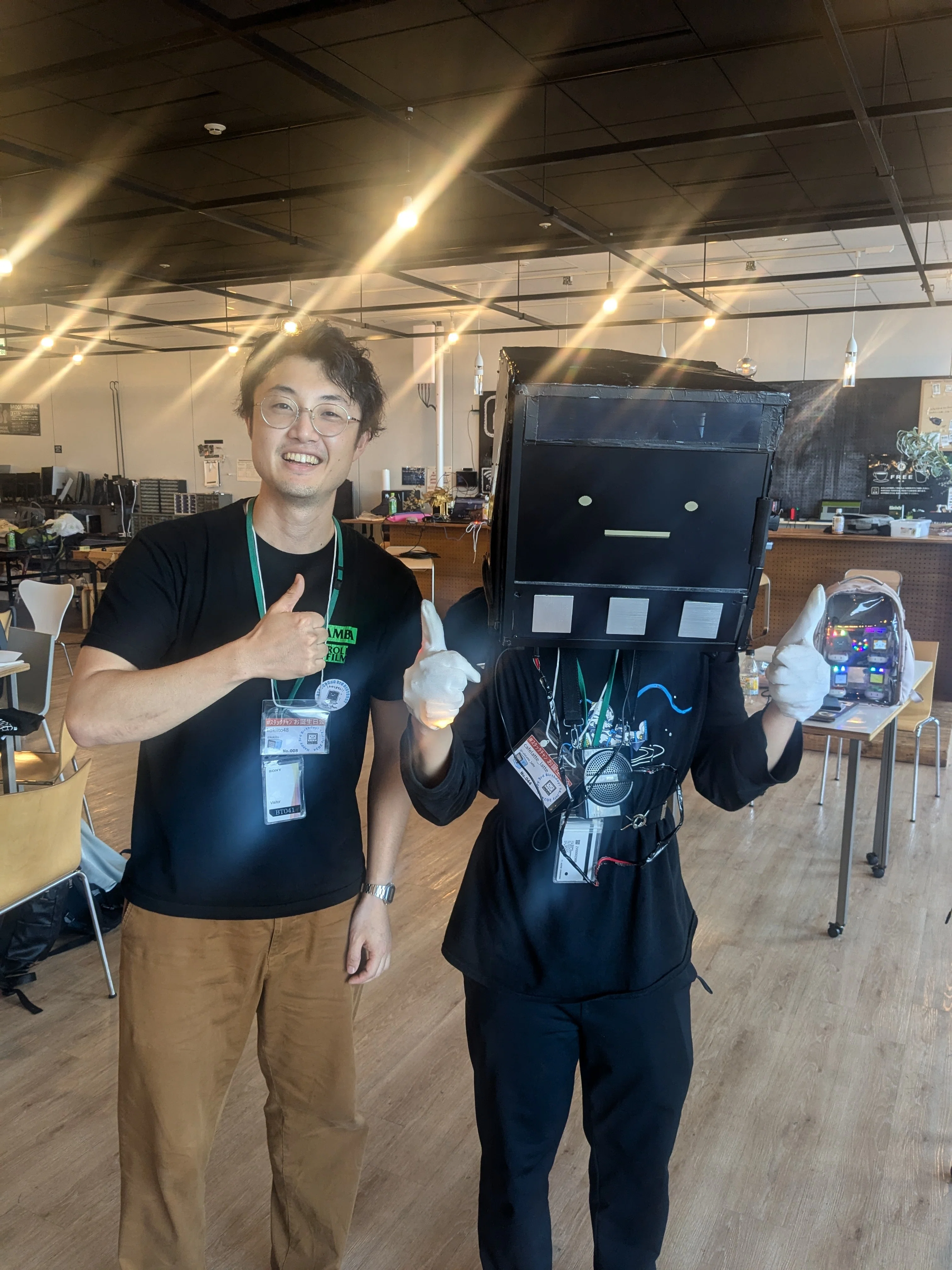
I took part in an offline event for a robot community called “Stack-chan.”
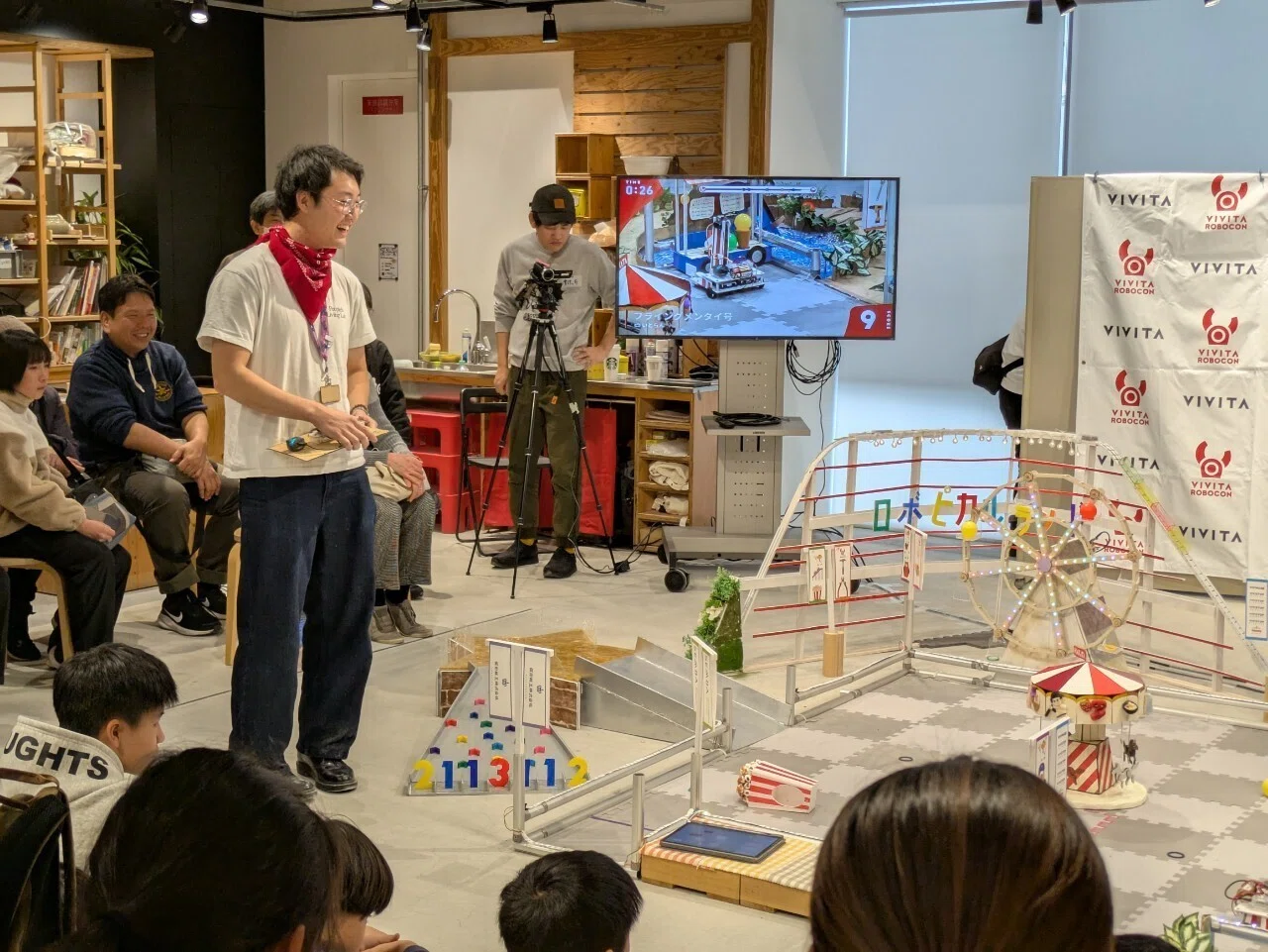
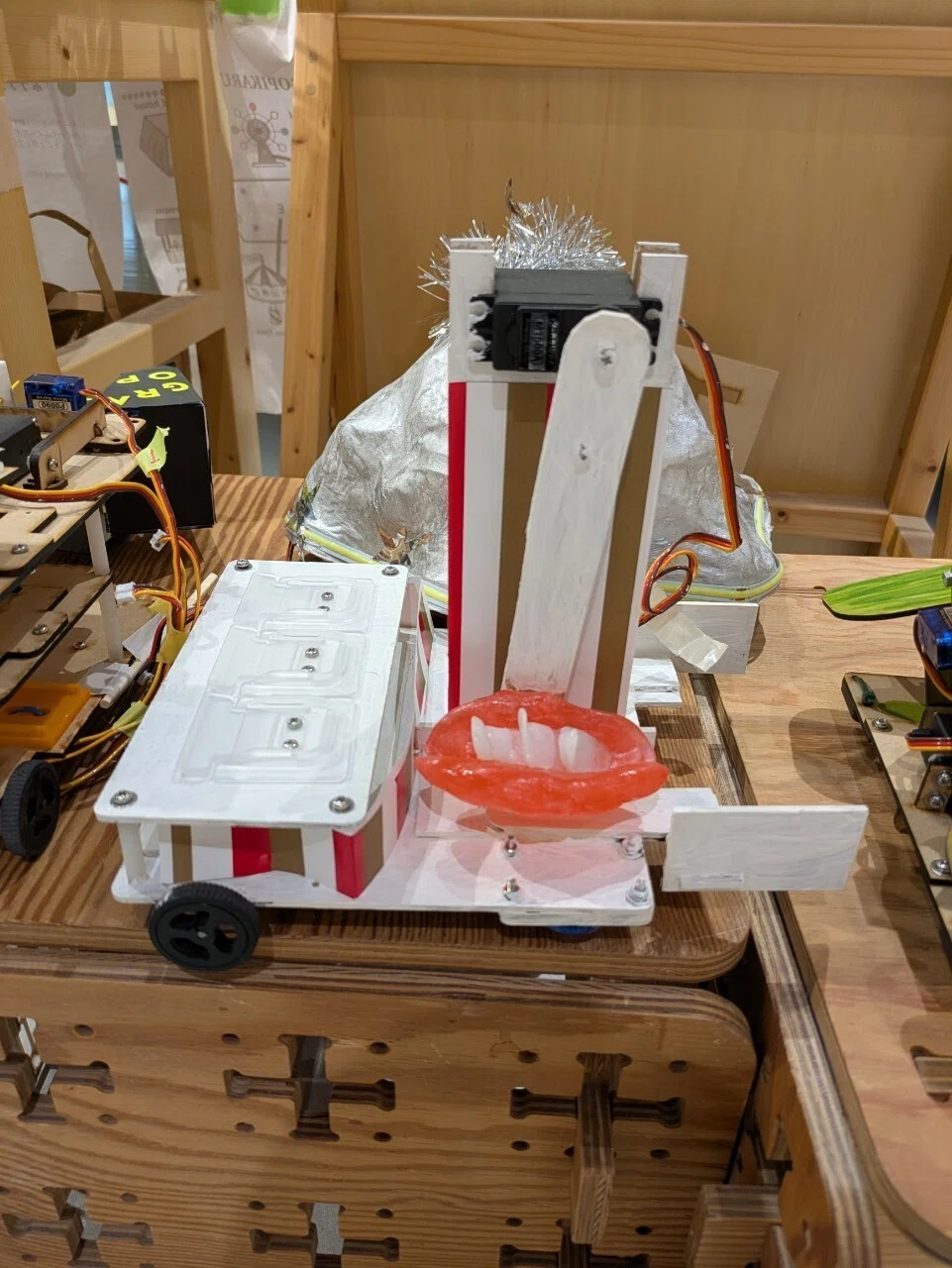
There’s a workshop space called “VIVISTOP Hakata” on the 10th floor of the Hakata Station building, alongside restaurants, and I started volunteering there. I entered a robot contest there this January, and it was absolutely a blast. What left an impression on me was one of the participating members crying because their robot performed well — I nearly cried myself just watching. There really is something moving about seeing something you made work well.
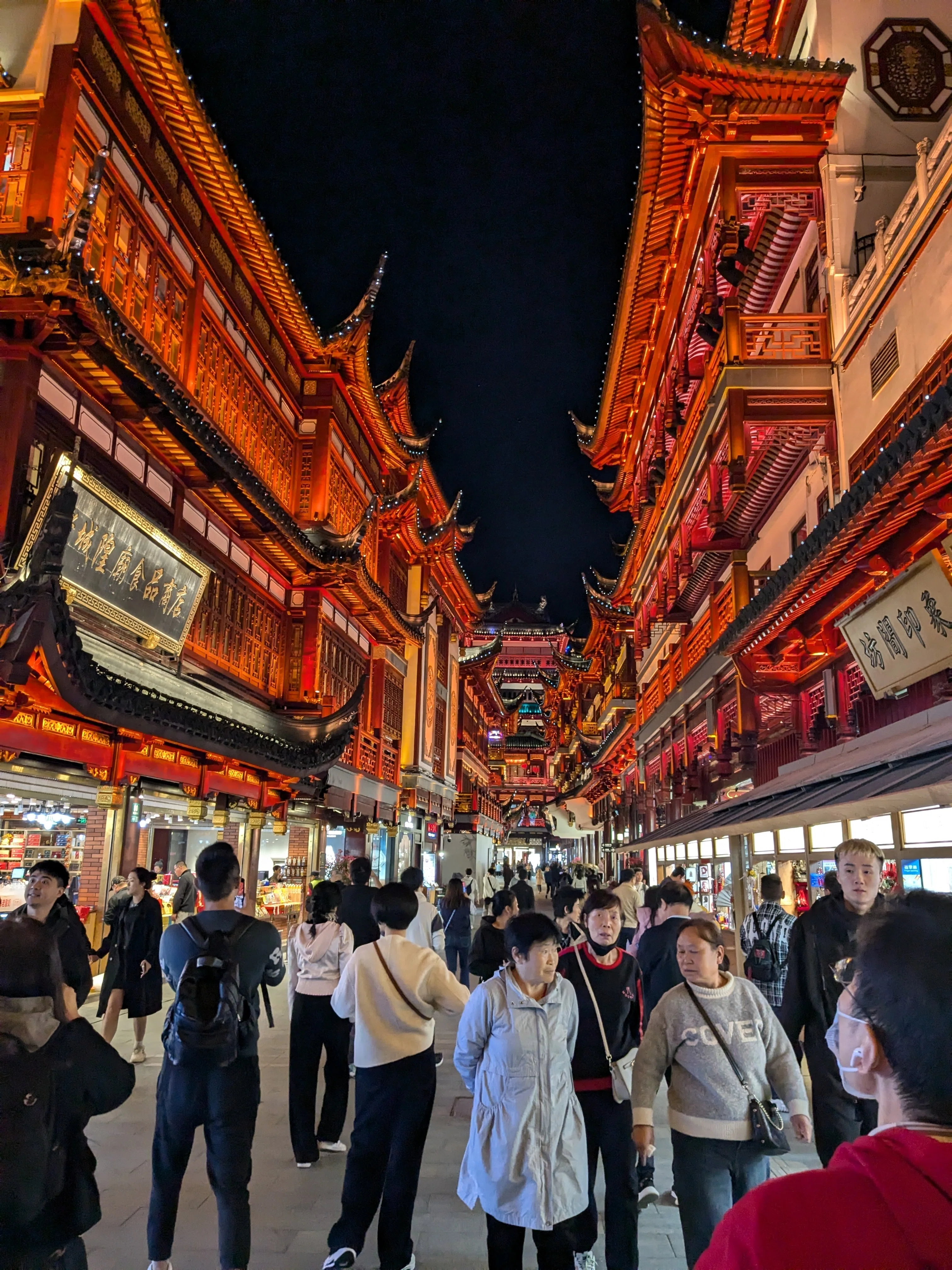
I also took a two-guy trip to Shanghai.
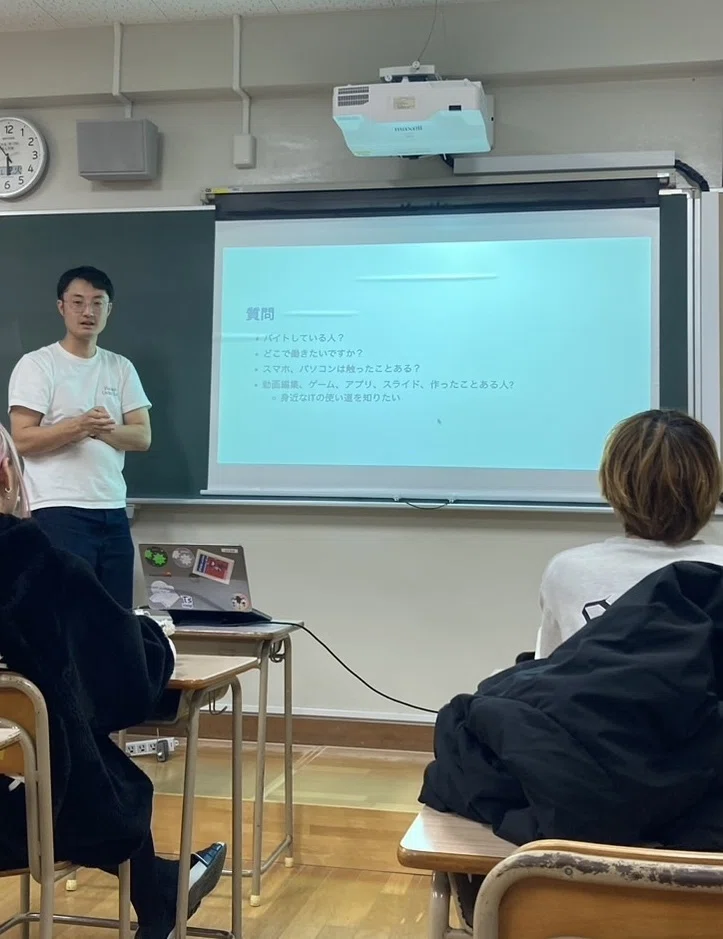
I spoke to high schoolers about the IT industry as part of a career guidance session.
I also got introduced to a side gig and tried it for the first time. It’s been going reasonably well so far.
The share house also gets regular one-month-stay visitors, and talking with them in the kitchen is a blast too. There’s a culture of celebrating everyone’s birthday, which is fun every single time. Occasionally there are conflicts too, so we make sure to talk things through properly.
Iikane Palette gets roughly two kinds of people: short-term stayers who come after hearing about it on the Coten Radio podcast, and people who settle in and live there for years while working. The first time I visited, about half the guests were people working as teachers on a temporary teaching license issued by the local government (TFJ), and the difference in background from my own gave me a real, refreshing culture shock.
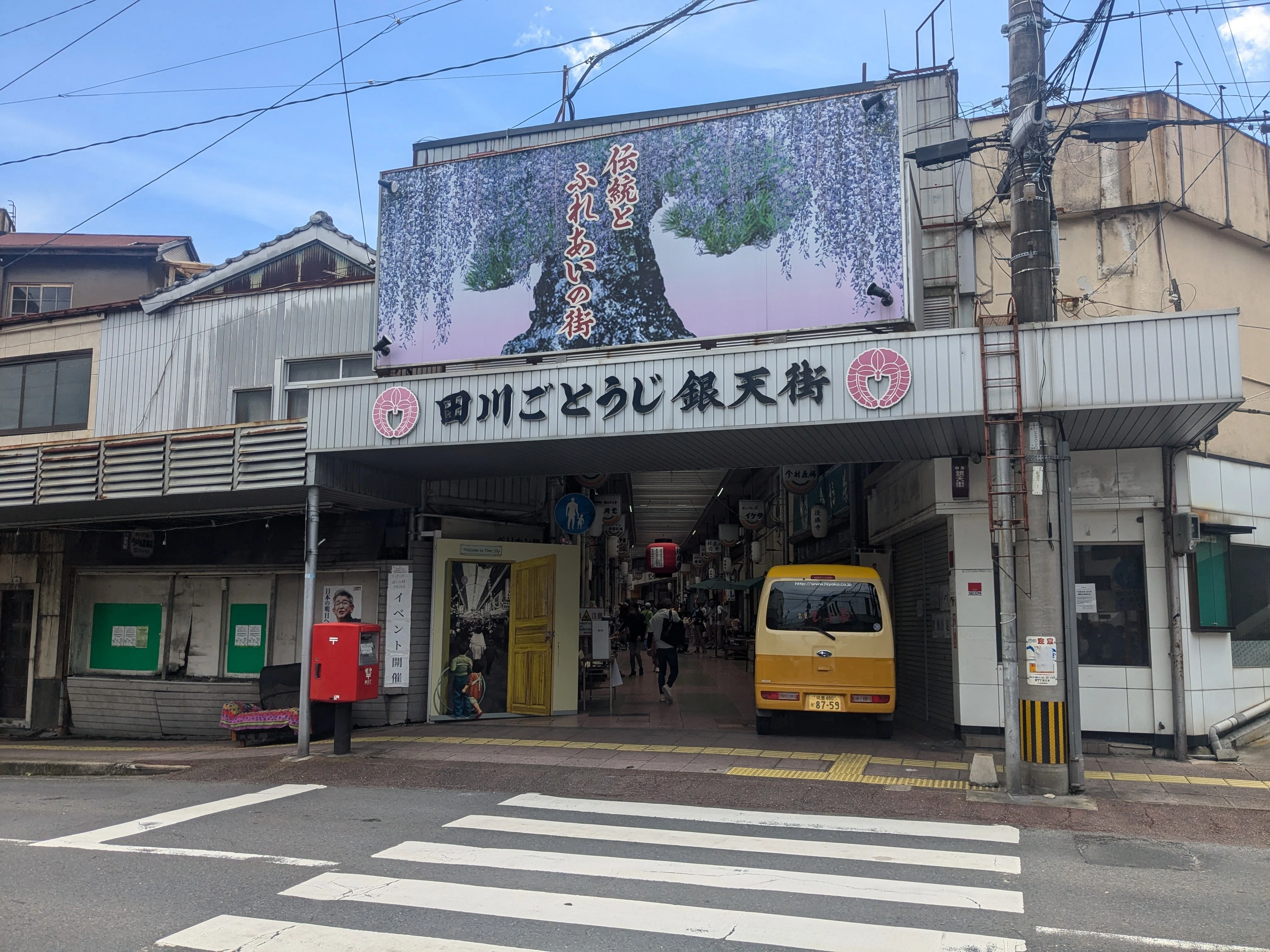
Through Iikane Palette, I also get to connect with people who’ve experienced Tokyo, or who want to start some kind of business or community, and talking with them and actually trying things together is fun too. The nearby shopping street has gone into decline, but it does get used for events run by high schoolers and university students, so I’m full of hope for how fun it’ll get from here.
As my health improved, I could reach for my goals
As my health improved and I started properly standing on my own two feet, I gradually became able to reach for the things I’d wanted to try.
Having had so much fun entering the robot contest, I’ve come to feel that I have a real knack and aptitude for quickly making things digitally — electronics, programming, video production. I daydream about how rich it’d be if I could keep giving that back to society. If I could use that ability to do facilitation that stirs together adults and kids, cities and rural areas, I think I’d be incredibly happy.
My attachment to adults and kids probably comes from my university days, when I developed film and presented work in a club, presented a paper abroad, and worked with university students in Kyoto through a student organization to publish a free paper — having adults support me in trying to express something to society left a strong impression on me.
It’s a bit of a luxurious thing to say, but I wish I’d had more support to express myself back in elementary or middle school. In that sense, kids should get to meet more good adults. Getting values from adults outside your family or school — not just money, but that too — is a really valuable experience, I think.
And adults should get to interact with kids too. While adults can operate as full-fledged members of society, I think busyness makes them prone to forgetting why they’re even working in the first place. Working alongside kids who don’t yet have the full picture forces you to talk through why you work, and why certain conventions exist. Through that, I think adults could spend a bit more time on what’s actually necessary for their lives, or realign the direction of their life. For example: finding a balance between work and family, contributing a bit to work in their local community, realizing they’re actually suited to a completely different job, or coming up with an idea for how their current job could make the world better — all good things, I think.
Also, this whole “city versus countryside” idea comes from my own experience of moving. Even if you’ve pushed yourself in the city, gotten worn down, and felt like there’s no place that wants you — I realized that out in the countryside, there are plenty of people who do want you. Coming to the countryside, slowing down a bit, reconfirming what you actually need, and then going back to the city — or just staying and living slowly in the countryside — both seem like good options to me.
By the way, “countryside” doesn’t necessarily mean “behind the times.” If anything, in my own experience, the countryside is sometimes further ahead than the city. Technological progress increases material wealth — freeing us from work and chores — but going forward, we need to think more deeply about well-being on the emotional side, and about hard-to-solve problems rooted in daily life, like caregiving, childcare, education, and healthcare.
For example, with the growing likelihood that most company employees will eventually be forced to work while providing caregiving, or the challenge of raising kids without becoming isolated, or how to fill the gap in self-worth that money and material things alone can’t fill — it feels to me like there are more people in Tagawa facing and tackling these kinds of problems head-on than in Tokyo. Maybe it’s just that I feel that way because of the interesting people around Iikane Palette. Either way, I think that counts as one of the good things about the countryside.
In short, my goal going forward is to take on the role of a facilitator who stirs things together, using whatever skills I’ve got. To do that, I want to fix my habit of holding back what I say out of some sense of guilt. Living at Iikane Palette and having a lot of conversations, I’ve gradually come to see the cause: things like “I hold back from speaking up because I don’t want to be disliked for saying something wrong” or “my pride is big, and I hold back to protect it.” I think the underlying feeling is a strong desire to not be disliked by anyone at all.
It’s impossible to avoid being disliked by absolutely everyone, so I want to gradually build up the resolve to not worry about people I have no control over anyway. To do that, I want to stop obsessing over my own cleverness and appearance, and let go of that attachment skillfully. If I say something wrong and end up disliked, properly apologizing is the genuinely clever move, and honestly, my looks aren’t that great to begin with. I probably worry about my looks because I want to be popular, but worrying about that kind of thing is exactly what makes you less popular.
Things to do this year
Here’s what I’m doing this year!
- Travel abroad (Kyrgyzstan and France)
- Build a visual novel demo playable to at least some extent
- Plan and hold a workshop
- Raise my English level to B1
- Save 500,000 yen
- Try exhibiting at Maker Faire
I hope whoever read this far found something helpful in it. If mixing well together can grow big enough, maybe even war would disappear.